
CNC metal machining services the most
CNC metal machining services have transformed the manufacturing landscape, offering unparalleled precision, repeatability, and efficiency in producing complex metal parts. This advanced technology, driven by computer numerical control, has become indispensable across a broad spectrum of industries, each leveraging its unique capabilities to meet stringent requirements and drive innovation. Understanding which sectors utilize CNC metal machining services the most provides insight into the critical role this technology plays in modern production, from mass consumer goods to highly specialized components.
The automotive industry stands as one of the largest consumers of CNC metal machining services. From engine blocks, cylinder heads, and crankshafts to intricate transmission gears, suspension components, and custom body panels, CNC machines are integral to manufacturing a vast array of vehicle parts. The demand for high performance, fuel efficiency, and safety necessitates components with incredibly tight tolerances and consistent quality, which CNC machining reliably delivers. This sector benefits immensely from rapid prototyping and high-volume production capabilities, allowing for quick design iterations and efficient mass manufacturing.
Another major user of CNC metal machining services is the aerospace industry. The exacting demands of aircraft and spacecraft components, where reliability and precision are paramount, make CNC machining an absolute necessity. Parts such as turbine blades, engine components, airframe structures, landing gear, and hydraulic manifolds are produced with meticulous accuracy to ensure the safety and optimal performance of flight systems. Materials like titanium, high-strength aluminum alloys, and exotic superalloys, commonly used in aerospace, are expertly machined by CNC systems that can handle their challenging properties.
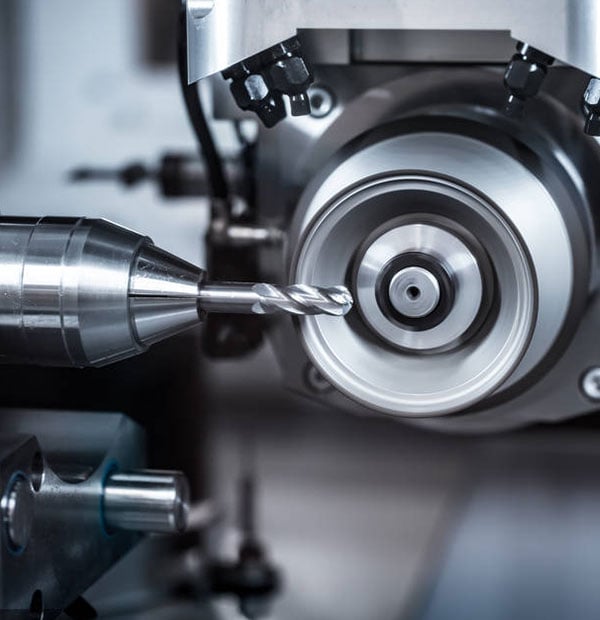
What industries use CNC metal machining services the most?
The medical industry also heavily relies on CNC metal machining services for life-saving and quality-of-life enhancing products. From surgical instruments and implants (like hip and knee replacements, dental implants, and bone screws) to diagnostic equipment components and prosthetic devices, precision is non-negotiable. CNC machining allows for the creation of intricate, biocompatible parts with extremely fine features and smooth surface finishes, meeting the rigorous standards for sterility and patient safety. The ability to produce customized implants tailored to individual patient anatomy further highlights the technology’s critical role.
Beyond these giants, the electronics and defense industries are significant users of CNC metal machining services. In electronics, the push for miniaturization and increased functionality requires tiny, complex metal components for devices ranging from smartphones and laptops to advanced circuit boards and connectors. The defense sector, meanwhile, demands incredibly durable and precise parts for firearms, military vehicles, communication equipment, and missile systems, where reliability in extreme conditions is paramount. Precision applications, including those requiring processes like centerless grinding for perfectly cylindrical components, are frequently employed to achieve the necessary accuracy for these critical parts.
Furthermore, industries such as oil and gas, marine, and even consumer goods increasingly leverage CNC metal machining services. The oil and gas sector requires robust, corrosion-resistant components for drilling equipment, valves, and pipelines that operate in harsh environments. The marine industry relies on CNC for durable parts for ships and offshore platforms, capable of withstanding corrosive saltwater. Even in consumer goods, where aesthetics and performance combine, CNC machining creates high-quality, intricate parts for everything from kitchen appliances to sporting equipment, ensuring product consistency and design integrity.
In summary, the pervasive use of CNC metal machining services across such a diverse range of industries underscores its transformative impact on modern manufacturing. From critical aerospace components and life-saving medical devices to high-volume automotive parts and durable defense equipment, CNC technology provides the foundation for producing components that are precise, reliable, and cost-effective. Its adaptability and capability to work with various metals ensure its continued importance in shaping the future of industrial production worldwide.